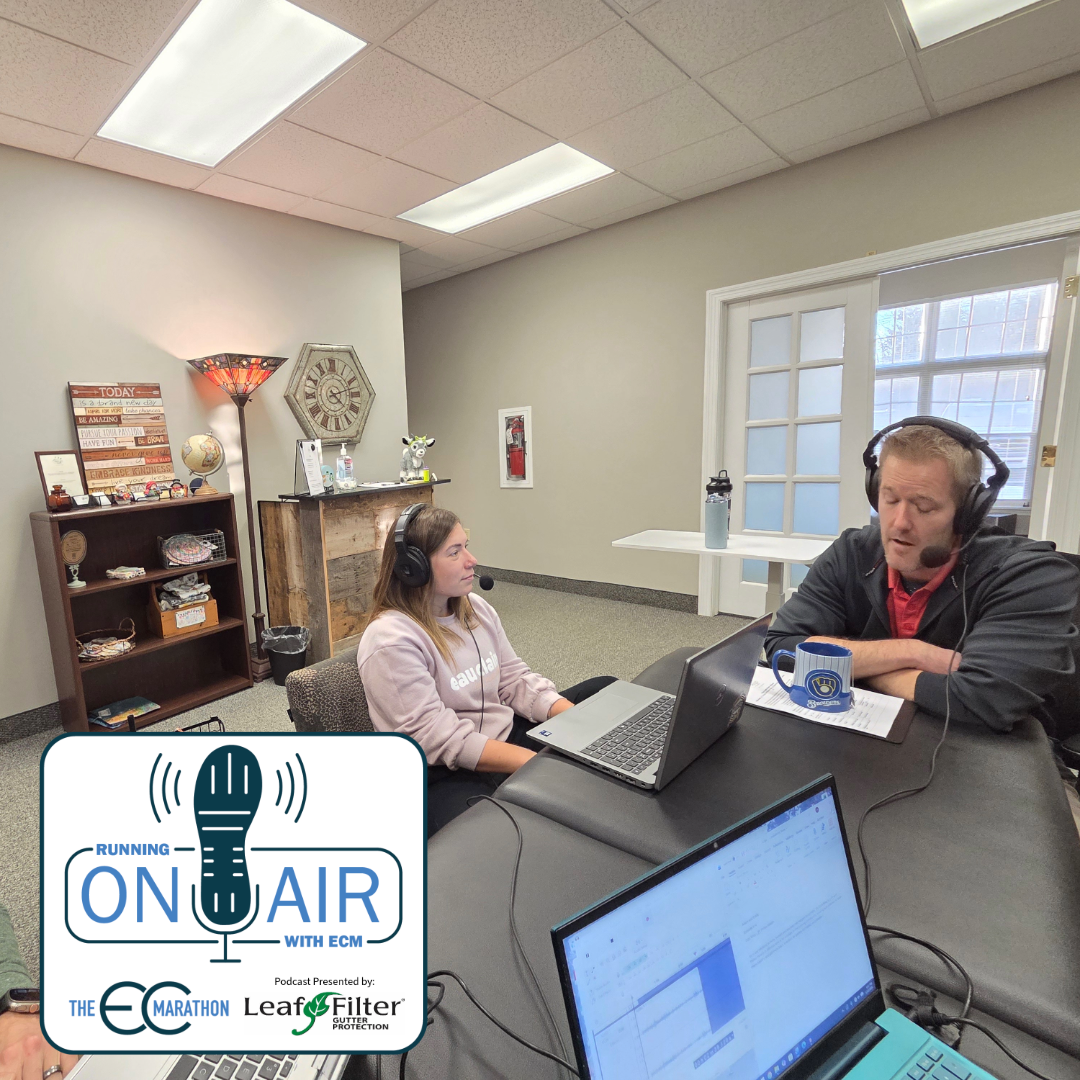
February Podcast Guest: Dr. Kurt Riley, PT
We kicked off another episode of Running on Air right here in the Chippewa Valley, and this one felt especially practical for anyone lacing up for their next training cycle. We sat down with local physical therapist and runner Dr. Curt Riley at PHiLEO Health in Altoona, and the conversation quickly turned into a masterclass on how runners can stay healthy, train smarter, and keep doing what they love.
Dr. Riley brings more than professional expertise to the table. He has been a runner for over 25 years, which shows up in how he approaches injuries. He understands something a lot of runners fear: no one wants to be told to stop running. Instead of defaulting to that, Dr. Riley takes on the role of a detective. His goal is to uncover what is really going on and find a way to keep people moving safely.
One of the biggest takeaways from our conversation is that most running injuries are not dramatic or sudden. They come from what Dr. Riley calls microtrauma, which is really just a load management issue. In simple terms, something in your routine changed faster than your body could adapt. That could mean increasing mileage too quickly, but it can also be more subtle. Switching from treadmill running to outdoor pavement, or even transitioning between seasons in Wisconsin, can put new stress on your body.
We talked through some of the most common problem areas runners experience. Foot pain, Achilles issues, knee pain, and hip discomfort all showed up on the list. These are not random injuries. They are signals that your body is absorbing more load than it can handle in a specific area.
So how do you stay ahead of that? Dr. Riley emphasized two habits he wishes more runners prioritized. First, cross training. Our bodies crave variety, and doing something beyond running helps maintain fitness while giving certain muscles a break. Second, cadence. Increasing your cadence slightly can reduce the amount of force your body absorbs with each step. It is a simple adjustment that can make a big difference over time.
We also got into a topic that every runner wrestles with at some point: how to tell the difference between discomfort and actual injury. Dr. Riley shared a helpful “stoplight” analogy. If pain improves as you warm up, that is a green light. If it stays the same, that is a flashing yellow. If it gets worse as you continue running, that is a red light. Learning to listen to those signals can save you from turning a small issue into something more serious.
Strength training came up again and again throughout the conversation. The recommendation was clear. If you want to build strength that supports your running, aim for at least two sessions per week. It does not have to be complicated or time consuming, but it does need to be consistent. Stronger muscles help manage load more effectively, which keeps you running longer.
We also touched on recovery, which can sometimes feel vague or easy to skip. Dr. Riley encouraged runners to think about active recovery instead of complete rest. Keep moving, but reduce the load. He also pointed out that tools like resting heart rate can give insight into how your body is recovering after big efforts like races.
One of the most refreshing parts of the conversation was Dr. Riley’s perspective on what a “runner’s body” looks like. There is no one-size-fits-all model. Runners come in all shapes, sizes, and styles, and success is not about looking a certain way. It is about finding what works for your body and staying consistent.
As we head into another training cycle, his final piece of advice stuck with us. Follow a plan and trust it. Avoid the temptation to do more just because you feel good on a given day. Consistency beats spikes in effort every time.
If you take one thing from this conversation, let it be this. You do not need to be perfect to be a runner. You just need to listen to your body, stay patient, and keep showing up.
Happy running.
Listen to the full “Running on Air” Episode Here: #14- Keeping You in the Game