October Podcast Guest: Kayse Elmquist
Building a Greener Race: How the Eau Claire Marathon Is Raising the Bar on Sustainability
The Eau Claire Marathon has always taken pride in being a community-driven event, but a new passion is shaping its future. Episode 10 of Running on Air highlights the growing movement to make the race one of Wisconsin’s most sustainable events. Co-hosts Adam Ludwig and Emily Wermund sit down with Kasey Elmquist, the marathon’s sustainability lead, to explore what it takes to build greener race weekend systems and why runners should care about these efforts.
Kasey brings both enthusiasm and expertise to the role. She works remotely as an analyst for a healthcare system, which allows her to keep her carbon footprint low, but her deeper love of sustainability comes from everyday habits. She composts at home, bikes when she can, and tries to make thoughtful choices rather than perfect ones. That personal approach shapes how she leads sustainability for the race.
Her role on the committee is fairly new. Until last year, the marathon had never designated a sustainability lead, even though the organization already practiced several green habits. The race historically donated discarded start-line clothing, delivered participant guides digitally, and encouraged bussing to the start. Kasey saw an opportunity to expand those efforts in a more organized and ambitious direction.
To build that foundation, she spent the past year forming community partnerships, researching best practices, and connecting with other races, including Grandma’s Marathon and Twin Cities Marathon. She also worked closely with volunteers during race weekend to monitor compost and recycling stations and to answer runners’ questions. The work requires creativity, patience, and a willingness to start small.
One example comes from a 5K event where the committee introduced a compost bin for banana peels. Only ten bananas made it into the bin, which the team still considered progress, and Adam even took them home for her personal compost system. Those small successes helped prepare the community for larger initiatives during marathon weekend.
Composting expanded significantly during the full race weekend because of higher participation numbers and multiple composting zones. Volunteers from the JONAH Environmental Task Force helped sort items and educate runners. That hands-on support made a noticeable difference and kept more waste out of landfills.
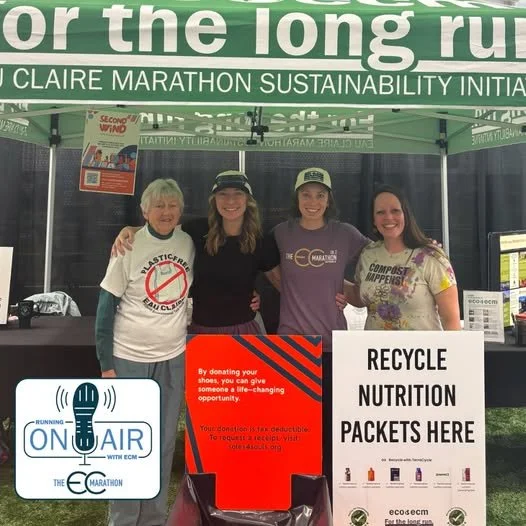
The shoe drive became one of the most successful experiments of the year. The team expected a modest number of donations, but the collection bins overflowed within the first hour of the expo. Piles of boxes and bags lined the back of the tent by closing time. The shoes went to Soles4Souls, an organization that redistributes shoes to low-income communities where they can be reused. The effort kept hundreds of shoes from entering landfills and gave them a meaningful second life.
The team also began collecting race-day nutrition wrappers through TerraCycle and launched a plogging event that brought volunteers together to pick up litter along the final miles of the course. These efforts not only improved the marathon experience for runners but also improved the city itself.
A partnership with students from Minnetonka High School’s Vantage program added momentum. The students spent a semester assessing the race’s environmental impact, researching industry standards, surveying local runners, and presenting short-term and long-term goals for the committee. Their creativity and dedication impressed the entire team and offered a roadmap for future progress.
As the conversation shifts, Kasey shares ideas for how individual runners can support sustainability. Local races reduce travel emissions, save money, and support community organizers. Higher-quality gear tends to last longer, which reduces waste. Runners can also carry their own hydration to reduce reliance on disposable cups. Some races have even adopted reusable cup systems or water-bottle refill stations to reduce single-use waste.
Looking ahead, Kasey sees a growing push toward cupless racing. Some events are experimenting with silicone reusable cups, while others provide refill stations along the course. These changes take time and education, but they reflect a broader shift happening across the running world.
As this episode shows, the Eau Claire Marathon’s sustainability journey is only beginning. Thanks to volunteers, community partners, passionate committee members, and thoughtful runners, the race is taking significant steps toward becoming one of the greenest events in the region. One banana peel, one pair of shoes, and one refill station at a time, the marathon is proving that small actions can create meaningful change.
Learn more about ECM’s Sustainability Initiatives here: Sustainability — Eau Claire Marathon
Listen to the full October episode of “Running on Air” here: Running on Air #10 - Keeping it Sustainable - Eau Claire Hometown Media | Podcast on Spotify